
The following information was formed by blending open wiki sources:
Acute lymphoblastic leukemia (ALL), also known as acute lymphocytic leukemia, is a form of leukemia, or cancer of the white blood cells. Malignant, immature white blood cells continuously multiply and are overproduced in the bone marrow. ALL causes damage and death by crowding out normal cells in the bone marrow, and by spreading (metastasizing) to other organs. ALL is most common in childhood and young adulthood with a peak incidence at 4-5 years of age, and another peak in old age. The overall cure rate in children is 85%, and about 50% of adults have long-term disease-free survival. ‘Acute’ refers to the undifferentiated, immature state of the circulating lymphocytes (“blasts”), and to the rapid progression of disease, which can be fatal in weeks to months if left untreated [1].
Causes
The cause of ALL is a critical research question [2]: In most cases, the cause of ALL is unknown [3]. Genetic risk factors may include Down syndrome, Li–Fraumeni syndrome, or neurofibromatosis type 1 [4]. Environmental risk factors may include significant radiation exposure or prior chemotherapy [4]. Evidence regarding electromagnetic fields or pesticides is unclear [5, 6]. Some hypothesize that an abnormal immune response to a common infection may be a trigger [5]. The underlying mechanism involves multiple genetic mutations that results in rapid cell division [3]. The excessive immature lymphocytes in the bone marrow interfere with the production of new red blood cells, white blood cells, and platelets [4]. Diagnosis is typically Acute lymphoblastic leukemia based on blood tests and bone marrow examination [7].
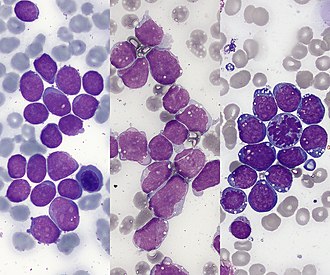
Types of acute lymphoblastic leukemias (Source: Wikipedia)
Treatment
Acute lymphoblastic leukemia is typically treated initially with chemotherapy aimed at bringing about remission [3]. This is then followed by further chemotherapy typically over a number of years [3]. Treatment usually also includes intrathecal chemotherapy since systemic chemotherapy can have limited penetration into the central nervous system and the central nervous system is a common site for relapse of acute lymphoblastic leukemia [8, 9]. Treatment can also include radiation therapy if spread to the brain has occurred [3]. Stem cell transplantation may be used if the disease recurs following standard treatment [3]. Additional treatments such as Chimeric antigen receptor T cell immunotherapy are being used and further studied [3].
References
- [1] Clinical Wiki Flow. (2024). Acute Lymphoblastic Leukemia (ALL) – General Information. Online: https://wiki.clinicalflow.com/acute-lymphoblastic-leukemia-all-general-information (Accessed Jan. 15, 2024).
- [2] Wikipedia. (2024). Acute lymphoblastic leukemia. Online: https://en.wikipedia.org/wiki/Acute_lymphoblastic_leukemia (Accessed Jan. 15, 2024).
- [3] Hunger, S. P., & Mullighan, C. G. (2015). Acute lymphoblastic leukemia in children. New England Journal of Medicine, 373(16), 1541-1552.
- [4] National Cancer Institute. (2024). Childhood Acute Lymphoblastic Leukemia Treatment (PDQ®)–Health Professional Version. Online: https://www.cancer.gov/types/leukemia/hp/child-all-treatment-pdq (Accessed Jan. 15, 2024).
- [5] Inaba, H., Greaves, M., & Mullighan, C. G. (2013). Acute lymphoblastic leukaemia. The Lancet, 381(9881), 1943-1955.
- [6] Vora, A. (2017). Childhood acute lymphoblastic leukemia. Springer International Publishing Switzerland.
- [7] Ferri, F. F. (2017). Ferri’s clinical advisor 2018 E-Book: 5 Books in 1. Elsevier Health Sciences.
- [8] Pui, C. H., & Evans, W. E. (2006). Treatment of acute lymphoblastic leukemia. New England Journal of Medicine, 354(2), 166-178.
- [9] Larson, R. A. (2018). Managing CNS disease in adults with acute lymphoblastic leukemia. Leukemia & Lymphoma, 59(1), 3-13.




Be First to Comment