
The process of getting a drug approved can be quite expensive and time-consuming (Chan et al., 2019; Çelik et al., 2021). Studies show that drug discovery R&D expenditures average up to 2.8 billion US dollars and the entire development process takes an average of 12-14 years (DiMasi et al., 2016; Lim, 2023; Sarkar et al., 2023; Wouters et al., 2020; Chang et al., 2023). This long period of time opens up opportunities for drug repurposing (repositioning), an alternative approach to shorten the drug development process. Drug repurposing refers to the use of a drug approved by various regulatory agencies for a new indication (Uysal and Köse, 2022). Many pharmaceutical companies are developing new treatments for various disease conditions by redesigning previously unsuccessful molecules. New technologies and computational tools have made drug discovery more cost-effective. This approach accounts for approximately 30% of drugs recently approved by the FDA (Parvathaneni et al., 2019). Drug repurposing has significant potential, especially in settings where medical needs are unmet, such as rare disorders.
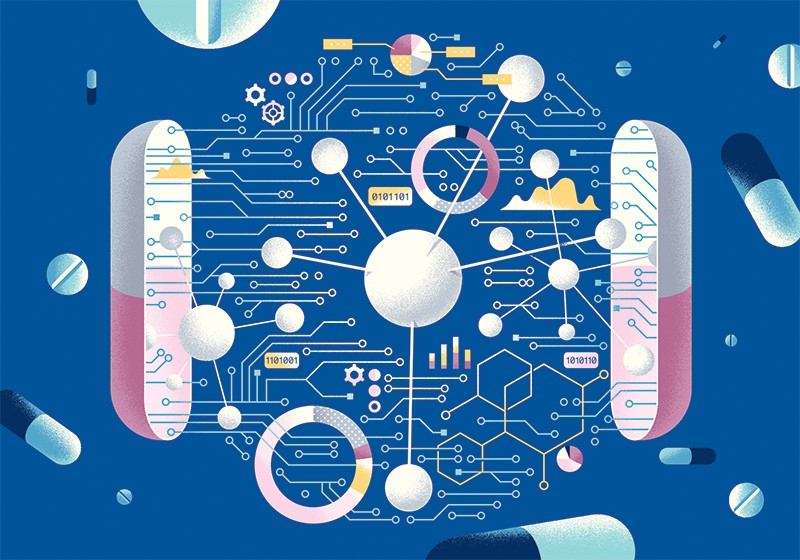
Studies in the field of drug repurposing are becoming increasingly important. However, various difficulties arise during the implementation phase. Since there are no strict and fast regulatory guidelines for the repurposing of drug candidates, providing relevant information to regulatory authorities is seen as a difficult obstacle for beginners. In general, drugs that are candidates for repurposing carry a potential risk of wasting time, especially if they have failed for a previously intended indication. In this case, it is recommended to design a development program where the same drug or compound is evaluated for more than one indication. Drug repurposing requires a complete understanding of the drug’s interactions with biological and molecular methods. With comprehensive knowledge, this hypothetical risk can be significantly reduced and lead to successful drug repurposing. Pharmaceutical companies focus on cost-effective and profitable areas of discovery. However, drug repurposing for rare and neglected diseases does not offer a guarantee of economic return. Therefore, a company should focus on specialized and more established research guidelines. In addition, another obstacle faced by pharmaceutical companies is the lack of financial incentives and research funds. For example, there is little incentive to invest in drug research for rare cancers without a guaranteed return on investment. Despite these challenges, drug repurposing is expected to continue with creative strategies and the will and desire of pharmaceutical companies (Vaidya et al., 2019; Kulkarni et al., 2019; Pantziarka et al., 2019; Parvathaneni et al., 2019; Shineman et al., 2014; Croset, 2014; Padhy and Gupta, 2011; Arrowsmith, 2011; Uysal and Köse, 2022).
The relevant text presents a section from the doctoral thesis (Turkish) of the project researcher Dr. İlhan Uysal, under the supervision of the project PI Dr. Utku Köse. You may access the full text of the thesis by contacting the relevant researchers or clicking here.
References
- Arrowsmith, J. 2011. Phase III and submission failures: 2007–2010. Nature Reviews Drug Discovery, 10(2), 87-87.
- Chan, H. S., Shan, H., Dahoun, T., Vogel, H., Yuan, S. 2019. Advancing drug discovery via artificial intelligence. Trends in Pharmacological Sciences, 40(8), 592-604.
- Chang, Y., Hawkins, B. A., Du, J. J., Groundwater, P. W., Hibbs, D. E., Lai, F. 2023. A Guide to In Silico Drug Design. Pharmaceutics, 15(1), 49.
- Croset, S. 2014. Drug repositioning and indication discovery using description logics (Doctoral dissertation, University of Cambridge).
- DiMasi, J. A., Grabowski, H. G., Hansen, R. W. 2016. Innovation in the pharmaceutical industry: new estimates of R&D costs. Journal of Health Economics, 47, 20-33.
- Kulkarni, N. S., Guererro, Y., Gupta, N., Muth, A., Gupta, V. 2019. Exploring potential of quantum dots as dual modality for cancer therapy and diagnosis. Journal of Drug Delivery Science and Technology, 49, 352-364.
- Lim, S. 2023. The Process and Costs of Drug Development 2022. FTLO Science. Accessed: Jan. 29, 2024. https://ftloscience.com/process-costs-drug-development.
- Padhy, B. M., Gupta, Y. K. 2011. Drug repositioning: re-investigating existing drugs for new therapeutic indications. Journal of postgraduate medicine, 57(2), 153.
- Pantziarka, P., Pirmohamed, M., Mirza, N. 2018. New uses for old drugs. Bmj, 361.
- Parvathaneni, V., Kulkarni, N. S., Muth, A., Gupta, V. 2019. Drug repurposing: a promising tool to accelerate the drug discovery process. Drug discovery today, 24(10), 2076-2085.
- Sarkar, C., Das, B., Rawat, V. S., Wahlang, J. B., Nongpiur, A., Tiewsoh, I., Sony, H. T. 2023. Artificial Intelligence and Machine Learning Technology Driven Modern Drug Discovery and Development. International Journal of Molecular Sciences, 24(3), 2026.
- Shineman, D. W., Alam, J., Anderson, M., Black, S. E., Carman, A. J., Cummings, J. L., Fillit, H. M. 2014. Overcoming obstacles to repurposing for neurodegenerative disease. Annals of clinical and translational neurology, 1(7), 512-518.
- Uysal, İ., Köse, U. 2022. “Drug Discovery and Artificial Intelligence (In Turkish)”. Dynamics Changed by Artificial Intelligence. Ed. Bilen, M. Education Publishing House, 1(1), 19-34.
- Vaidya, B., Parvathaneni, V., Kulkarni, N. S., Shukla, S. K., Damon, J. K., Sarode, A., Gupta, V. 2019. Cyclodextrin modified erlotinib loaded PLGA nanoparticles for improved therapeutic efficacy against non-small cell lung cancer. International journal of biological macromolecules, 122, 338-347.
- Wouters, O. J., McKee, M., Luyten, J. 2020. Estimated research and development investment needed to bring a new medicine to market, 2009-2018. JAMA, 323(9), 844-853.



Be First to Comment